


In diesem ArtikelAntippen und direkt zum Abschnitt springen
As of November 19, 2026. This guide compares German, English, Japanese, Korean, and Chinese Pokémon cards by release date, booster contents, quality, tournament legality, Price, and collector value.
In short: If you want to play in official tournaments in Germany or read and play with children, choose German cards. English cards are the most sought-after internationally and are also tournament-legal in Europe. Japanese cards come out months earlier, are inexpensive per Booster, and are popular with collectors for their print quality, but generally cannot be used in official tournaments in Europe.
The key differences at a glance
| Criteria | German | English | Japanese |
|---|---|---|---|
| Release date | at the same time as English | at the same time as German | usually several months earlier |
| Cards per Booster | 10 | 10 | 5 (regular expansions) |
| Booster per Booster Display | 36 | 36 | usually 30 |
| Official tournaments in Europe | yes | yes | usually no |
| Price per Booster (example from cardcosmos) | from approx. €7 | from approx. €6 per Booster Display | from approx. €2.50 per Booster Display |
| Resale / demand | mainly in German-speaking regions | largest worldwide | popular with collectors, especially for illustrations |
| Suitable for | Children, Players in Germany | Players, Collectors, resale | Collectors, opening fans |
The example prices are from our shop, as of November 2026. They vary greatly depending on the set; older or highly sought-after sets cost significantly more.
Release date: Japan is almost always first
New Pokémon sets almost always appear in Japan first. The international sets, namely German, English, French, Italian, Spanish, and Portuguese, follow a few months later and often combine cards from several Japanese sets. For example: According to the official Japanese website, the Japanese set “Aura Seeker” (Japanese “Hadou Seeker”), featuring Mega Lucario Z ex, is due to be released on November 27, 2026. A release date for a German or English version has not yet been officially announced. Find out more in our article on Pokémon Aura Seeker.
There are exceptions: The anniversary set “30 Years” (in English, “30th Celebration”) was the first set to launch worldwide simultaneously, on September 16, 2026. So if you want to get new cards as early as possible, Japanese products are still usually your best bet.
Booster contents and Price: 5 or 10 cards?
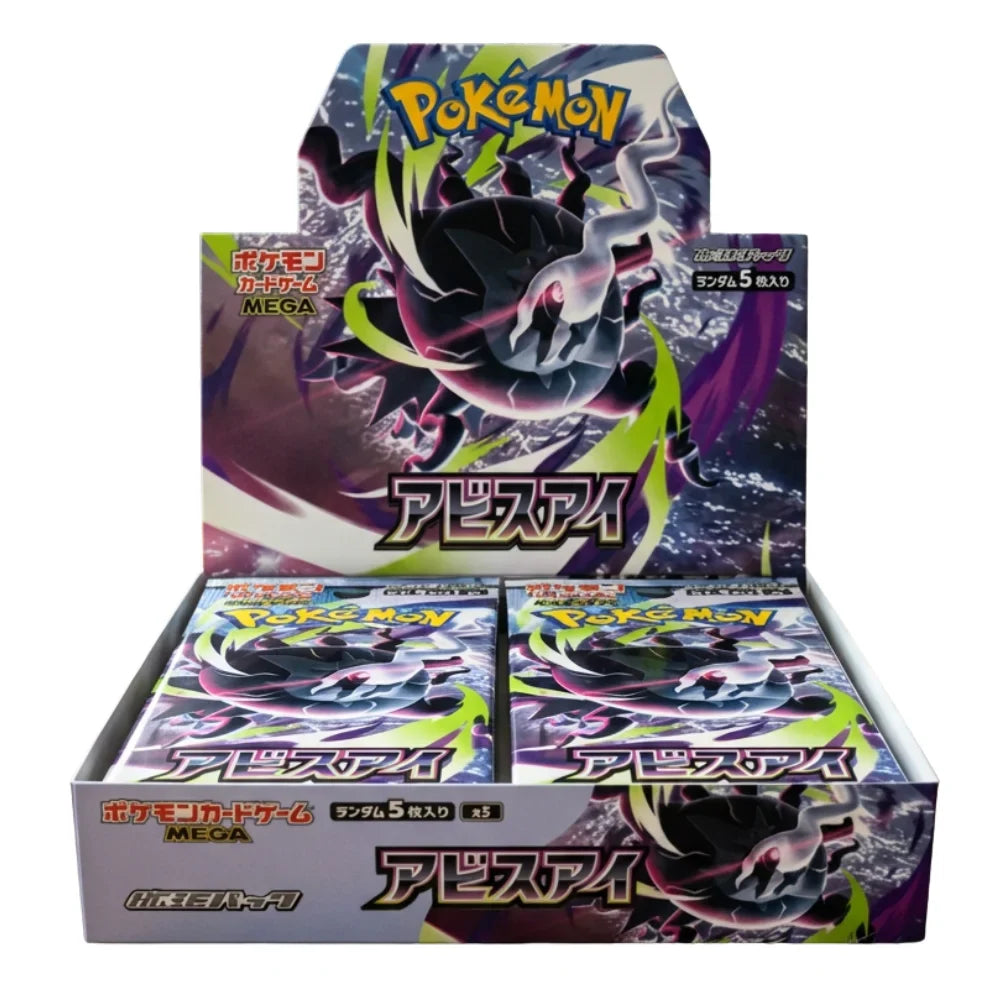
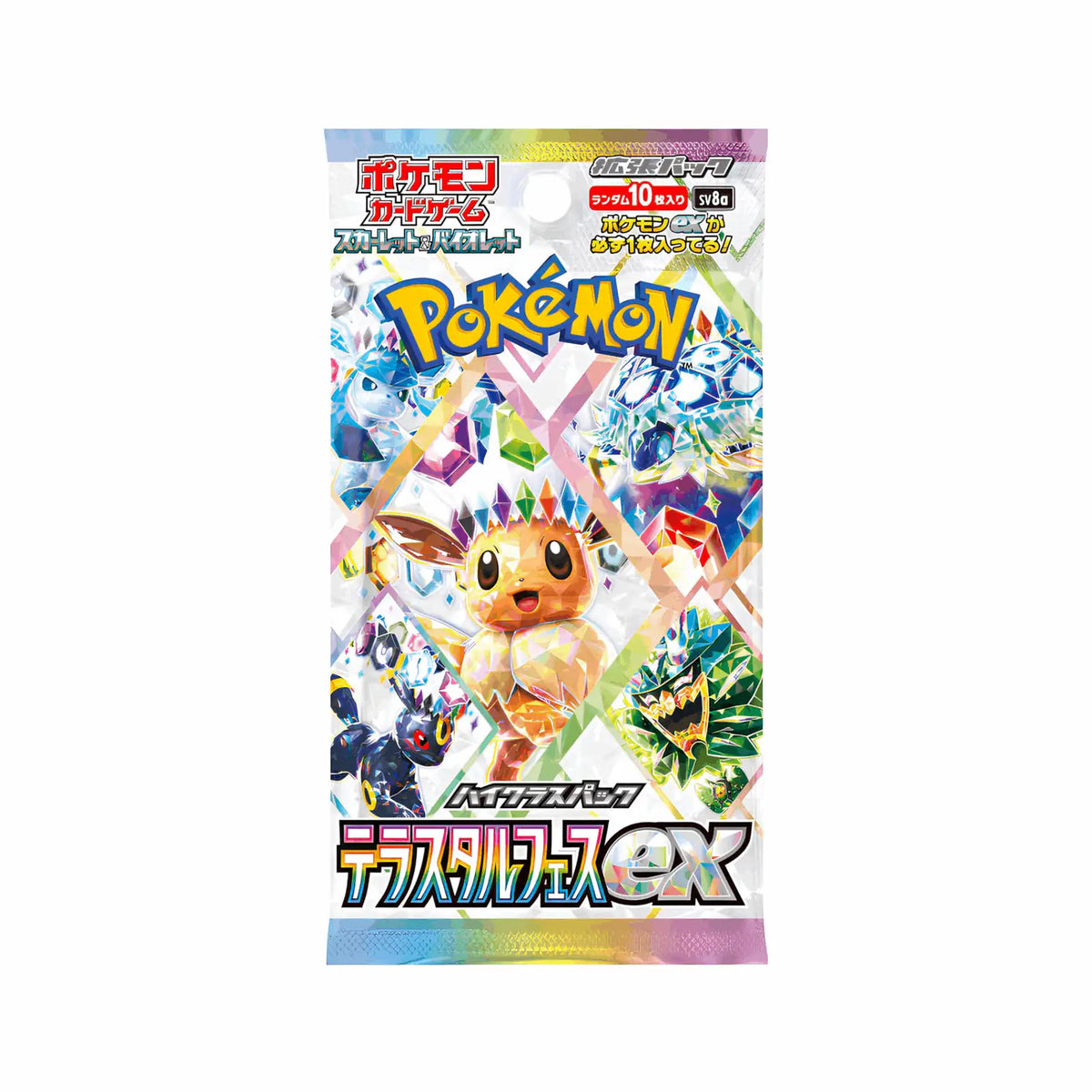
A Japanese Booster from a regular expansion contains 5 cards, while a German or English one contains 10. Japanese Booster therefore seem very inexpensive, but the only fair comparison is per card. With the Japanese Abyss Eye display of 30 boosters, you're paying about €0.50 per card with us, compared with around €0.79 for a German Single Booster Pack. Japanese high-class sets such as “Shiny Treasure ex” or “Terastal Festival ex” have a different structure, with 10 boosters per Booster Display and more cards per Booster.
Important for planning: Japanese prices are rising. According to the official Japanese website, a regular Booster for sets from May 2026 will cost 200 yen instead of the previous 180 yen; for sets from May 2027, the manufacturer has announced a further increase to 230 yen. We explain what this means in practice in the article Japanese Pokémon Booster will be more expensive in 2027.
 Abyss Eye 30er Booster Display - JapaneseView product →
 Mega-Entwicklung: Optimale Ordnung Booster Pack - GermanView product →
 Mega Evolution Pitch Black Booster Display - EnglishView product →
Printing and quality
Japanese cards have a reputation among collectors for being more precisely centered and consistently printed. This matches our experience sorting them, but it is no guarantee: Japanese cards can also have printing defects, and German cards often come out of the Booster in excellent Condition. Anyone sending cards for Grading pays attention to the centering, corners, and surface of every single card anyway. Find out more in What are graded cards?.
One practical difference: The backs of Japanese cards look different from those of international cards. So if you build a Deck, you shouldn't mix languages indiscriminately.
Tournaments: Which Language is allowed?
According to the current tournament handbook, cards must be in a Language approved for the relevant region for official Play! Pokémon tournaments. For Europe, these are English, French, German, Italian, Portuguese, and Spanish. Mixed-language Decks are allowed as long as the card backs are uniform. Japanese, Korean, and Chinese cards are not included in Europe. There is an exception at major events such as Regional and International Championships or the World Championships: participants may use cards in their home country's Language as well as English.
For casual game nights, league meetups, or in-store tournaments, the organizer decides which languages are allowed. If in doubt, ask beforehand. You can find the current rules on the official Play! Pokémon documents page.
Collector value: Which cards are easier to sell later?
- English has the largest international market. Sought-after cards can be sold worldwide.
- Japanese cards are highly sought after by collectors, especially for their illustrations and cards available only in Japan, such as certain promos.
- German cards fetch somewhat lower prices than English cards for many modern cards because the market is smaller. But vintage cards, such as German 1st Edition cards, have a loyal collector base.
The value of a specific card depends not only on its Language but above all on its Condition and Rarity. Our guide Pokémon Card Values and Selling walks you through the process step by step.
Korean and Chinese cards
Korean cards largely follow the Japanese sets: They generally have the same structure, with smaller boosters, and are released shortly after Japan. They are often cheaper than the Japanese originals and are therefore popular with collectors who want to open a lot. Depending on the set, the Displays contain varying numbers of Booster, so check the respective product description.
Chinese cards are available in Simplified and Traditional Chinese. Cards in Simplified Chinese in particular often come in their own product lines, such as “Gem Packs” or Slim and Jumbo boxes that are not available in any other Language. This makes them interesting to Collectors looking for something special. Neither language is legal for tournaments in Europe.
You can find an overview of all sets by Language on our pages about Japanese, Korean, and Chinese Pokémon sets.
 Storm Emeralda Booster Display - KoreanView product →
 Gem Pack Vol. 7 Booster Box - ChineseView product →
 30th Anniversary Celebration Booster Display - ChineseView product →
Our recommendation
- For children and families: German. Children can read the cards and play with friends.
- For tournament players in Germany: German or English.
- For Collectors focused on resale: English, and for certain cards, Japanese.
- For opening packs on a small budget: Japanese, Korean, or Chinese.
- For anyone who wants new sets early: Japanese.
Read more
- Elite Trainer Box, Booster Display, or Booster Bundle? Comparing Pokémon products
- Pokémon Release calendar 2026/2027
- Card Sleeves sizes: the Sleeves guide
Frequently asked questions
Can I use Japanese Pokémon cards in tournaments?
Generally not at official Play! Pokémon tournaments in Europe. The permitted languages here are English, French, German, Italian, Portuguese, and Spanish. For casual games and local store tournaments, the organizer decides.
Why do Japanese Booster packs have only 5 cards?
This is the format of regular Japanese expansions. The Booster packs are cheaper per pack, so it's best to compare prices per card.
Are Japanese Pokémon cards more valuable?
Not necessarily. English cards have the largest market, while Japanese cards are highly sought after for certain illustrations and Japan-exclusive cards. Ultimately, the card, Rarity, and Condition are what matter.
Do Japanese cards fit in regular Card Sleeves?
Yes. Japanese Pokémon cards have the standard size, like German and English cards. The smaller “Japanese Size” sleeves are intended for other games like Yu-Gi-Oh!.
When is a Japanese set released in German?
Usually a few months later, often combined with cards from other Japanese sets. The exact date is only announced by The Pokémon Company.









Leave a comment
This site is protected by hCaptcha and the hCaptcha Privacy Policy and Terms of Service apply.